How I Learned to Stop Worrying and Love the Exploit
Although it isn’t as well-known as MySQL, MariaDB, or MongoDB, Redis is still one of the most widely used databases. During a hands-on lab called Keyspace, after a standard nmap scan, I happened to come across an open port 6379 that is used specifically for this service.

The 6379 - Pentesting Redis section on HackTricks shows that using redis-cli -h with the target IP and then the command INFO can immediately shows if unauthenticated access is permitted, like our case.
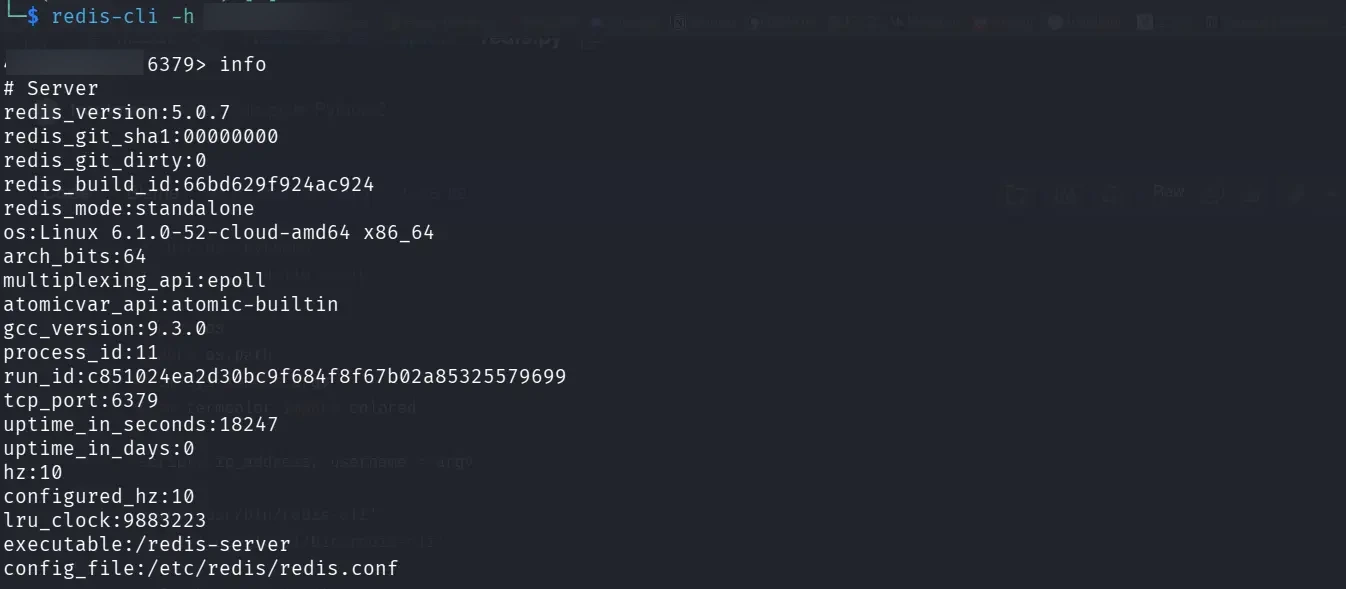
Reading further on the same section, it appears that is possible to find the home folder of the redis user with the command config get * in order to upload a public ssh key and access via ssh with that user. But the only folder showing up in this lab was the root folder.

Even better that a generic user I would say! Obviously, an automatic exploit for that was already written, the only issue was that is written for Python 2. So, after a quick update on the code and after providing the right folder to update the ssh, I’ve tried to launch the updated version:

Aaaand…an easy win!

You can find the full updated code here. Happy hacking!